

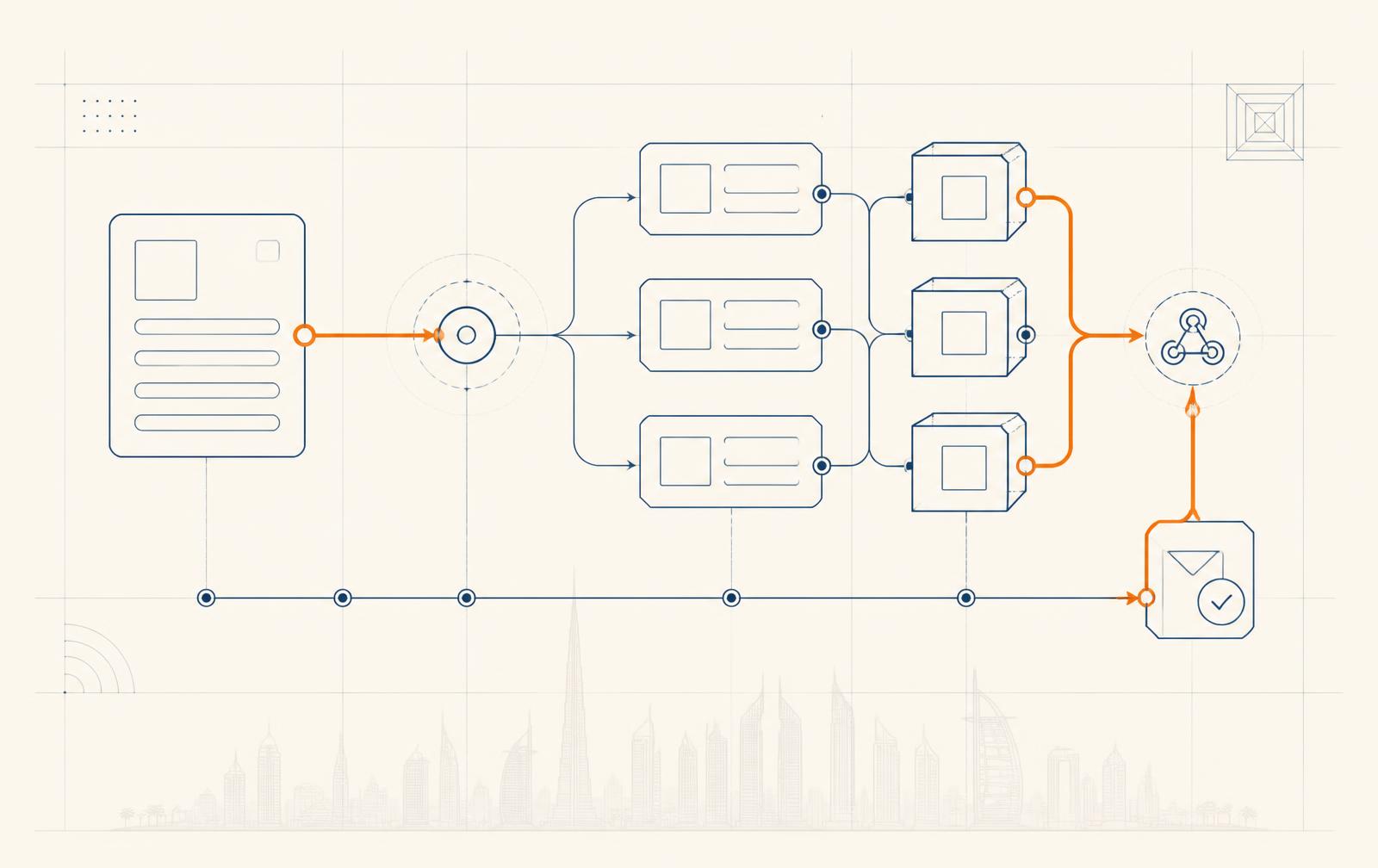
Developers
Integrate once. Change policy without a deploy.
Compliance owns the journey; you own the integration. The API stays stable while thresholds, lists, and rules move in the console.
Principles
What you can rely on
Sandbox first
Every account starts with a sandbox key and deterministic test subjects, so you can build the full happy path and every failure branch before go-live.
One API, four pillars
KYC, KYB, AML screening, and KYT are resources on the same API with the same auth, error envelope, and pagination.
Signed webhooks
Decisions, escalations, and rescreening hits arrive as HMAC-signed events with replay protection and at-least-once delivery.
Idempotent writes
Every write accepts an Idempotency-Key, so a retried onboarding never creates a duplicate case or double-bills a verification.
Quickstart
From key to live decision
- 1
Request sandbox access
Request access and the VerifiX team sets up your sandbox tenant and key.
- 2
Pick a journey preset
Reference a preset by its identifier instead of assembling checks yourself. Compliance can edit the preset later without a code change.
- 3
Create a verification
POST the subject and get back a hosted URL, or drive each check yourself if you own the capture UI.
- 4
Handle the webhook
Verify the signature, store the decision and the evidence bundle reference against your customer record, and continue your flow.
- 5
Go live
Swap the sandbox key for a live key after the production checklist is signed off, We walk through the go-live checklist with you before you switch to live keys.
curl -X POST https://api.verifix.ae/v1/verifications \
  -H "Authorization: Bearer $VERIFIX_API_KEY" \
  -H "Idempotency-Key: onb_9f2a41" \
  -H "Content-Type: application/json" \
  -d '{
    "journey": "uae_vara_retail_individual",
    "subject": {
      "type": "individual",
      "reference": "cust_10241",
      "country": "AE"
    },
    "redirect_url": "https://app.example.ae/onboarding/return"
}'{
"id": "ver_01HZY8QK3M4T",
"status": "awaiting_subject",
"journey": "uae_vara_retail_individual",
"hosted_url": "https://flow.verifix.ae/s/8Qk3M4T",
"expires_at": "2026-03-04T09:12:00Z",
"checks": [
{ "type": "document", "status": "pending" },
{ "type": "liveness", "status": "pending" },
{ "type": "sanctions_pep", "status": "pending" },
{ "type": "risk_score", "status": "pending" }
]
}{
"type": "verification.completed",
"created_at": "2026-03-04T09:19:44Z",
"data": {
"id": "ver_01HZY8QK3M4T",
"subject_reference": "cust_10241",
"decision": "approved",
"risk": { "score": 24, "band": "low" },
"checks": [
{ "type": "document", "status": "passed" },
{ "type": "liveness", "status": "passed" },
{ "type": "sanctions_pep", "status": "no_match" },
{ "type": "risk_score", "status": "passed" }
],
"evidence_bundle_url": "/v1/verifications/ver_01HZY8QK3M4T/evidence"
}
}Webhook security
Verify every event before you trust it
Signatures are HMAC-SHA256 over the raw request body. Compare in constant time and reject anything that fails.
import { createHmac, timingSafeEqual } from "crypto";

export function verifyWebhook(rawBody: string, signature: string, secret: string) {
  const expected = createHmac("sha256", secret).update(rawBody).digest("hex");
  return signature.length === expected.length &&
    timingSafeEqual(Buffer.from(signature), Buffer.from(expected));
}
Event catalog, retry schedule, and rate limits: "documented in the developer reference"
Reference
Full documentation
Complete endpoint reference, SDK packages, Postman collection, and the sandbox test-subject matrix are published in the developer portal, https://api.verifix.ae/v1
Want to see the API against your own flow?
Bring your onboarding funnel and we will map the journey and the webhook contract on the call.